Information for Parents and Carers
Employability & Careers – Parent and Caregiver Timeline
Parents and carers play a vital role in supporting young people to make informed education and career decisions. We are committed to providing impartial, up-to-date information and personalised guidance at every stage.
Supporting your child’s career journey is easier when you know what to focus on each year. Start here for general guidance on helping your child make education and career choices:
National Careers Service – Helping Young People Make Education and Career Choices
Below is a year-by-year guide with suggested actions, timelines, and useful links for parents and caregivers of students in Years 9–13.
Focus: Self-awareness and discovering potential careers.
What you can do:
- Encourage exploration of hobbies, subjects, and school clubs.
- Discuss different career paths and interests.
- Support completion of career questionnaires or skills assessments.
Suggested Activities & Resources:
- Career quizzes and interest inventories
- Job shadowing or industry tasters
- Research professions and visit local workplaces
Useful Links:
Focus: Work experience and skill development.
What you can do:
- Support work experience placements (1 week in July).
- Discuss subject choices and relevance to future careers.
- Encourage reflection on experiences: record work experience, volunteering, clubs, or projects. School subjects, what do they enjoy, or find challenging?
- Identify skills and interests: Link activities to skills like teamwork, communication, creativity, or problem-solving and log them on Unifrog.
Suggested Activities & Resources:
- Volunteering or extracurricular projects
- Work experience placements
- Research post-16 options: A-Levels, vocational courses, T Levels, apprenticeships
Useful Links:
Focus: Post-16 choices (sixth form, college, apprenticeships).
What you can do:
- Attend open days / evenings together.
- Research sixth form courses, colleges, and apprenticeships.
- Explore T Level options and their industry placement component
- Discuss long-term goals and realistic options taking into account predicted grades and entry requirements.
Suggested Activities & Resources:
- Sixth Form and college open days or taster sessions
- Research apprenticeships via Find an Apprenticeship
- Prepare CVs and cover letters using Unifrog
- Use the National Careers Service Website for ideas
Useful Links:
Focus: Higher education, apprenticeships, and employability skills.
What you can do:
- Explore university courses and entry requirements.
- Support relevant work experience placements (1 week in June).
- Begin portfolio or personal statement preparation.
Suggested Activities & Resources:
- Attend university open days
- Mock interviews and career guidance appointments
- Gain work experience in areas of interest
Useful Links:
Year 13 (Age 17-18) – Decisions & Applications
Focus: Finalising post-18 pathways.
What you can do:
- Support applications to universities, colleges, or apprenticeships.
- Prepare for interviews, assessments, and entrance exams.
- Explore career or gap year options.
Suggested Activities & Resources:
- Finalise personal statements and portfolios
- Attend open days and university interviews
- Apply for summer internships or voluntary projects
Useful Links:
We recognise that every young person’s journey is different.
If your child has Special Educational Needs and Disabilities (SEND) or requires additional support:
- Speak to the school’s SENDCo to support with tailored guidance.
- Explore pathways that match strengths, interests, and support needs.
- Consider supported internships, apprenticeships, vocational pathways, and specialist provision where appropriate.
- Ensure reasonable adjustments are discussed for work experience, interviews, and assessments.
General Tips for Parents & Caregivers
- Keep open conversations about careers.
- Encourage curiosity and exploration of different industries.
- Support early planning and reflective documentation of experiences.
- Use platforms like Unifrog to track opportunities, skills, and research.
- Remember that career pathways are rarely linear — there are multiple routes to the same career, and young people can change direction.
Qualification Levels
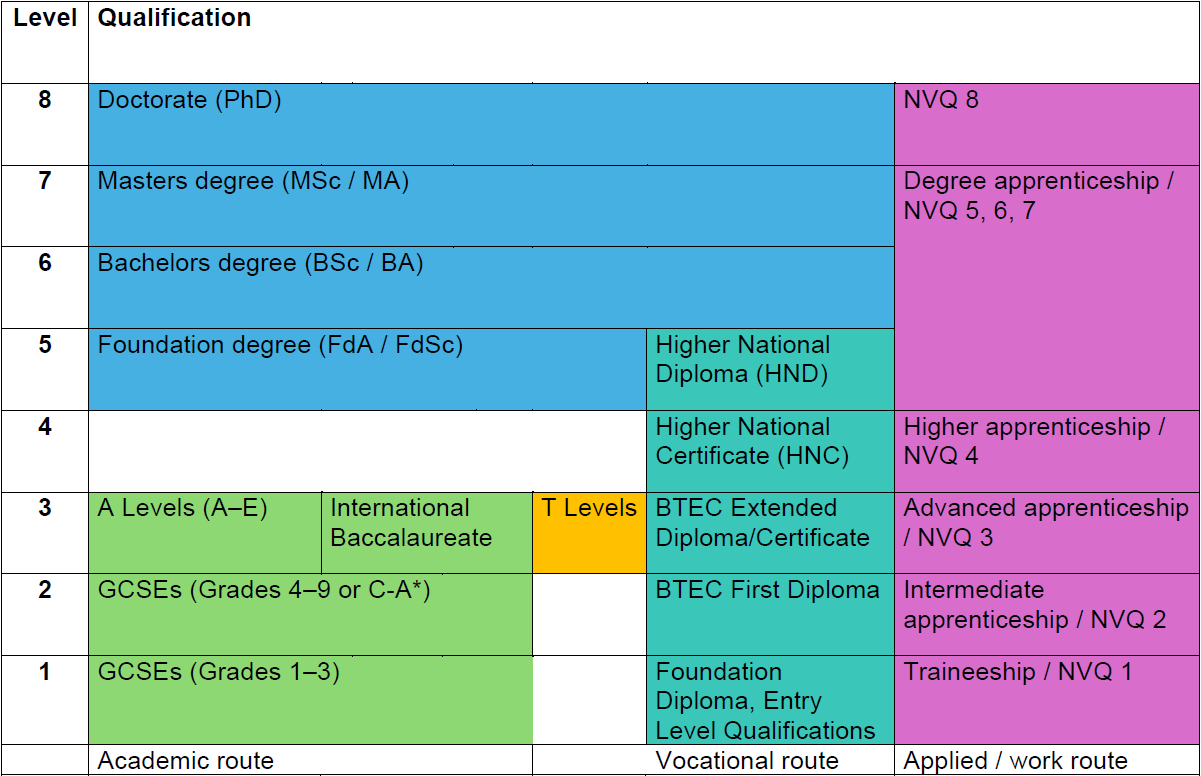
Notes for Students and Parents
- All routes offer valuable opportunities and can lead to further study or employment.
- Understanding qualification levels helps with planning next steps at ages 16 and 18.